Slip Disc Treatment in PCMC, Pune:
Back pain is a common health problem that affects millions of people in India, often caused by the pressures of modern work life and heavy lifting. One of the most painful spinal conditions is a Herniated Disc or “slipped” disc, which can cause debilitating pain in the back, legs, and even the neck. If left untreated, it can lead to permanent nerve damage and loss of mobility, making timely slip disk treatment essential for long-term health. At Ayush Orthopedic Clinic, we specialise in providing advanced Slip Disc Treatment in PCMC, Pune. Our clinic is led by the Best Orthopedic Doctor in PCMC, Dr. Ashutosh Jadhav, who brings over 10 years of experience to the field. Whether you need non-surgical therapy or advanced Spine Surgery, Dr. Ashutosh Jadhav provides personalized care to help you return to a pain-free life.
Slipped Disc Meaning:
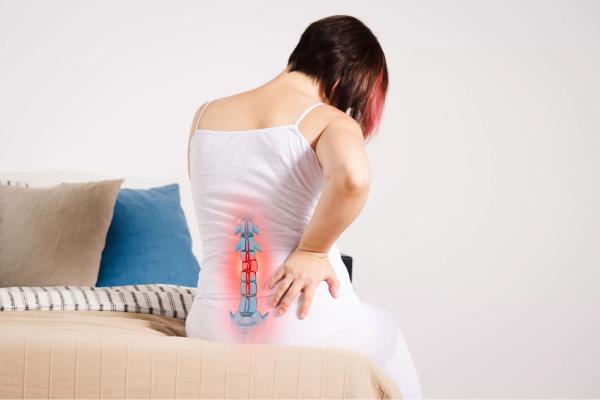
To understand a slipping disc, we first need to look at the disc in backbone structures. The human body disc, or intervertebral disc, acts as a shock absorber between the vertebrae. It has a tough outer layer and a jelly-like centre.
A slipped disc meaning (or herniated disc) is when the soft inner part of the disc pushes out through a tear in the outer layer. This can press on nearby nerves, causing intense pain. In medical terms, the pivd full form in medical is Prolapsed Intervertebral Disc, while ivdp full form in medical stands for Intervertebral Disc Prolapse.
Disc Slip Causes:
A ruptured disc doesn’t always happen due to a single injury; it is often a combination of factors. Common disc slip causes and ruptured disc causes include:
- Age-related Wear: As we age, the intervertebral disc loses water content and becomes less flexible.
- Improper Lifting: Using back muscles instead of leg muscles to lift heavy objects.
- Sudden Strain: Twisting or turning awkwardly while moving.
- Sedentary Lifestyle: Sitting for long hours puts immense pressure on the backbone disc.
- Obesity: Excess body weight increases the load on the lower spine.
Common slipped disk symptoms:
The symptoms of disk slip depend on where the disk problem is located. If it’s in the lower back, it affects the legs; if it’s in the neck, it affects the arms.
- Lower Back Pain: Sharp pain in the lumbar region.
- Sciatica: A shooting pain that travels from the buttock down to the leg.
- Numbness: A “pins and needles” sensation in the affected limb.
- Muscle Weakness: Difficulty lifting the foot or holding objects.
- Neck Pain: A neck bulge or disc prolapse in the neck can cause ruptured disc neck symptoms, affecting the shoulders and hands.
Common Slip disk conditions:
There are various stages and types of disk problem symptoms:
- Bulging Disc: The disc protrudes but the outer layer is intact. Bulging disc and treatment usually involve physiotherapy.
- Herniated Disc: The inner material leaks out. Bulging disc herniated disc symptoms are usually more severe.
- Sequestration: A piece of the disc breaks away completely into the spinal canal.
- Cervical IVDP: A herniated disc bulging disc neck issue causing arm pain.
- Lumbar IVDP: A slipped disk lower back problem causing leg pain.
When Should You See the Best Doctor for Slip Disc Treatment in PCMC, Pune?
You should search for Slip disk treatment near me and visit Dr. Ashutosh Jadhav if:
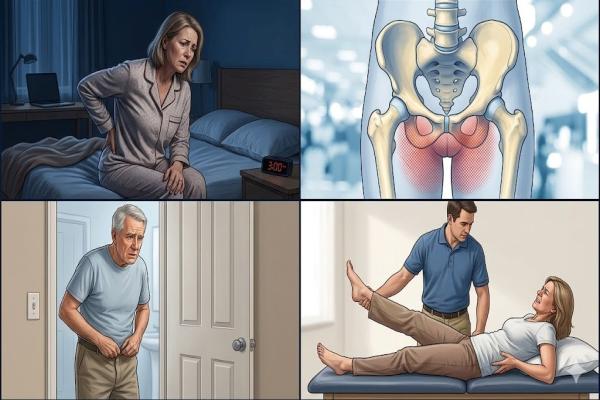
- Your pain is so severe that it interferes with work or sleep.
- You experience “saddle anaesthesia” (numbness in the groin area).
- You have difficulty controlling your bladder or bowel movements.
- You fail a leg raise test (pain when lifting the leg while lying down).
Diagnosis of Slip Disc at Ayush Orthopedic Clinic:
At Ayush Orthopedic Clinic, we use a combination of physical and clinical tests:
- Physical Exam: Checking reflexes, muscle strength, and the leg raise test.
- MRI Scan: The gold standard to see the exact disc meaning and nerve compression.
- CT Scan: To check the bony structures of the herniated discs spine.
- X-Rays: To rule out other causes of Back Pain, like fractures.
Non-Surgical Slip Disc Treatment in PCMC, Pune
Can a slip disk be cured without surgery? Yes! Over 90% of patients recover with conservative treatments for slipped discs.
- Medications: Disc herniation medicine including anti-inflammatories and nerve pain relievers.
- Topical Relief: Using a high-quality muscle pain relieving gel.
- Rest: Short-term bed rest (not more than 2 days) to settle acute inflammation.
- Injections: Epidural steroid injections to reduce nerve swelling.
Physiotherapy and Exercises for Slip Disc Recovery:
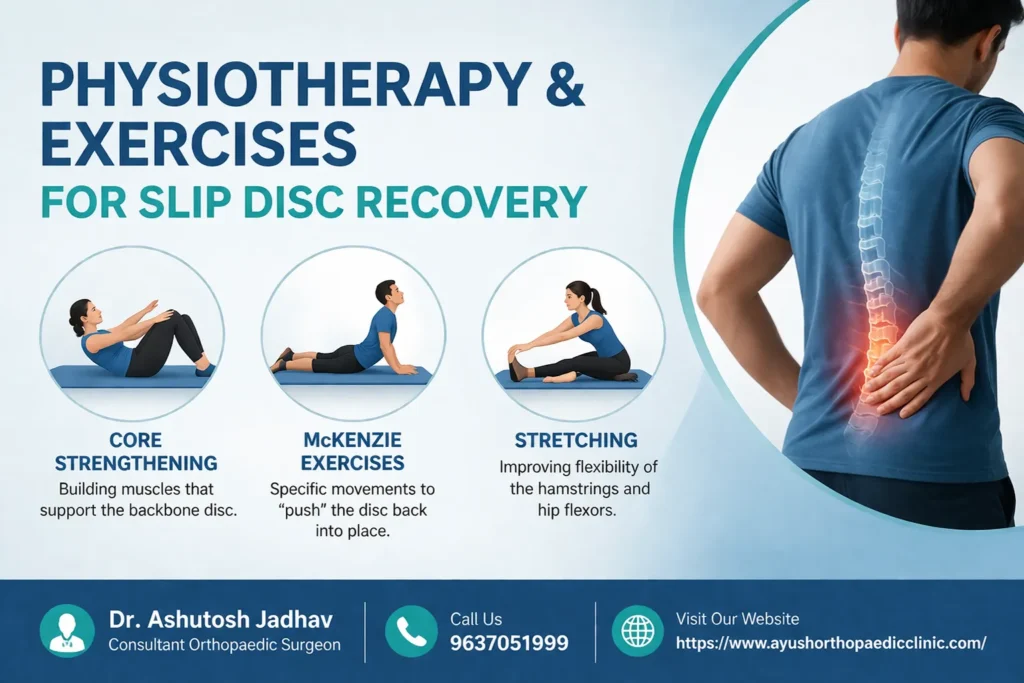
Therapy for slipped disk is crucial for long-term health. Our disk slip treatment involves:
- Core Strengthening: Building muscles that support the backbone disc.
- McKenzie Exercises: Specific movements to “push” the disc back into place.
- Stretching: Improving flexibility of the hamstrings and hip flexors.
Advanced and Minimally Invasive Slip Disc Treatment:
If medicines fail, Dr. Ashutosh Jadhav, a leading Orthopedic Surgeon Pune, offers advanced disk slippage treatment:
- Microdiscectomy: A tiny incision to remove the part of the ruptured disc lower back pressing on the nerve.
- Endoscopic Discectomy: The most advanced slip disk operation using a camera, resulting in zero muscle damage.
When is Surgery Required for Slip Disc?
Slipped disk surgery is considered only when:
- There is “Blown back” syndrome (severe disc rupture).
- Progressive nerve damage (paralysis/weakness).
- Persistent pain after 6-12 weeks of non-surgical treatment for a slipped disk.
Slipped Disk Surgery in PCMC, Pune:
When you need a slip disk operation, Ayush Orthopedic Clinic ensures the highest safety. Dr. Ashutosh Jadhav performs slipped disk operation using micro-surgical tools. This Spine Surgery in PCMC focuses on decompressing the nerve while maintaining spinal stability.
Recovery, Rehabilitation & Long-Term Spine Care:
Slip Disc surgery recovery time is much shorter today.
- First 24 Hours: Most patients walk on the same day.
- First 2 Weeks: Return to light desk work.
- 6 Weeks: Full recovery and start of intensive rehab.
Patients often ask about Slip Disc surgery side effects. While rare, they include temporary numbness or minor stiffness, which resolves with physiotherapy.
Slip disk treatment cost in PCMC Pune:
The Slip disk treatment cost or Slip Disc surgery cost depends on the procedure:
- Physiotherapy & Medicine: Highly affordable and effective for most.
- Surgical Cost: Depends on the use of implants or microscopic technology.
At Ayush Orthopedic Clinic, we provide a clear breakdown of costs and assist with all insurance/TPA approvals.
Dr. Ashutosh Jadhav’s Expertise in Slip Disc Treatment:
As an experienced Orthopedic surgeon in PCMC, Dr. Ashutosh Jadhav is an expert in managing intervertebral disc rupture. His 10-year track record includes thousands of successful outcomes for ivdp and pivd patients. His approach combines surgical precision with a deep understanding of spinal biomechanics.
Why Choose Dr. Ashutosh Jadhav? – Best Slip Disc Specialist in PCMC, Pune
1. Advanced Diagnostics
Access to the best orthopedic clinic in PCMC, Pune.
2. Patient-Centric
He explains the meaning of slipped disc clearly so you can make informed choices.
3. Comprehensive Care
From disc herniation medicine to robotic-assisted surgery.
4. Proven Results
Highest success rates in Slip Disc Treatment in PCMC, Pune.
Fix Your Appointment with Best Slip Disc Surgeon in Pune:
Don’t live with the fear of a “blown back.” Whether you are looking for Slip disk treatment near me or need a second opinion on surgery, we are here to help.
- Book An Appointment With Dr. Ashutosh Jadhav
- Call: 9637051999
- Clinic Location: Ayush Orthopedic Clinic, Ground floor, Lifestyle Society, Shop no, G-2, PCMC Link Rd, Pune, Pimpri-Chinchwad, Maharashtra 411033
FAQs About Slip Disc Doctor In PCMC, Pune:
A bulging disc occurs when the intervertebral disc shifts out of place and “bulges” into the spinal canal without tearing. Disk herniation meaning refers to a more severe state where the tough outer layer of the backbone disc actually tears, allowing the soft inner gel to leak out and press on nerves.
What is slipped disk? It is a common term for a herniated disc. In simple terms, slip disk kya hota hai—yeh tab hota hai jab spine ki do haddiyon ke beech ki disc apni jagah se hat jati hai aur nerves par dabav dalti hai, jisse peeth aur pairon mein tez dard hota hai.
You can heal a bulging disc naturally through a combination of dedicated physiotherapy, core-strengthening exercises, and maintaining proper ergonomics. Dr. Ashutosh Jadhav at Ayush Orthopedic Clinic often recommends specific slip disk remedy protocols like the McKenzie method and anti-inflammatory diets to avoid surgery in early stages.
A rupture disc spine (also called a ruptured disc) means the outer casing of the disc has burst. This can cause spinal cord problems disc issues, where the leaked material causes chemical irritation or physical pressure on the spinal cord or nerve roots.
To heal a slipped disc naturally, one must focus on controlled movement and “centralisation” of pain. Using a high-quality muscle pain relieving gel, practicing heat therapy, and avoiding heavy lifting allow the prolapsed disc to shrink over time. Dr. Ashutosh Jadhav provides personalised non-surgical Slip Disc Treatment in PCMC, Pune at Ayush Orthopedic Clinic to guide this process.
A straight leg raise (SLR) is a clinical disc test used to diagnose ivdp or pivd. While lying on your back, the doctor lifts your straight leg; if you feel sharp pain below the knee between 30° and 70°, it usually indicates a slipping disc pressing on the sciatic nerve.
The pivd full form in medical terms is Prolapsed Intervertebral Disc. It is essentially the same as ivdp (Intervertebral Disc Prolapse), describing the condition where the disc in backbone protrudes and causes nerve irritation.
Slip disk in Marathi is often referred to as Mankyatil Gadi Sarakne. This describes the displacement of the cushion (disc) between the vertebrae, which leads to severe back pain and leg numbness.
EXCELLENTTrustindex verifies that the original source of the review is Google. I got operated for Bilateral Quadriceps Repair Under Dr.Ashutosh Jadhav. Dr operated me well and guided me through physio and now I m able to walk freely.Posted onTrustindex verifies that the original source of the review is Google. This clinic have a very good results I had a lower back pain That's recovered in just fev days Kindly visit for your treatment 😀Posted onTrustindex verifies that the original source of the review is Google. Good treatment for leg pain visited Ayushman orthopedic clinic. Dr. Ashutosh Jadhav explained well and pain reduced. Satisfied with treatment.Posted onTrustindex verifies that the original source of the review is Google. Droctor khup chan samjun sangtat ani reasult 100% ahePosted onTrustindex verifies that the original source of the review is Google. The treatment is so good, and I got cured much faster it's also affordable n affective even the staff n doctors were polite . Thank youPosted onTrustindex verifies that the original source of the review is Google. Described as friendly, helpful, and highly skilled in orthopedic care.Posted onTrustindex verifies that the original source of the review is Google. The doctor is very experienced and knowledgeable. He listens patiently and understands the problem well. His nature is very polite and well-behaved. I received the right treatment and had a good experience at the hospital.Posted onTrustindex verifies that the original source of the review is Google. Dr.Jadhav treated my kneepain well.